C-Section Recovery: Week 1 to Week 6 — What Actually Happens
Recovering from a C-section? A week-by-week guide from week 1 to week 6 — stitches, pain, diet, stairs, red flags & Indian care tips. Read now.
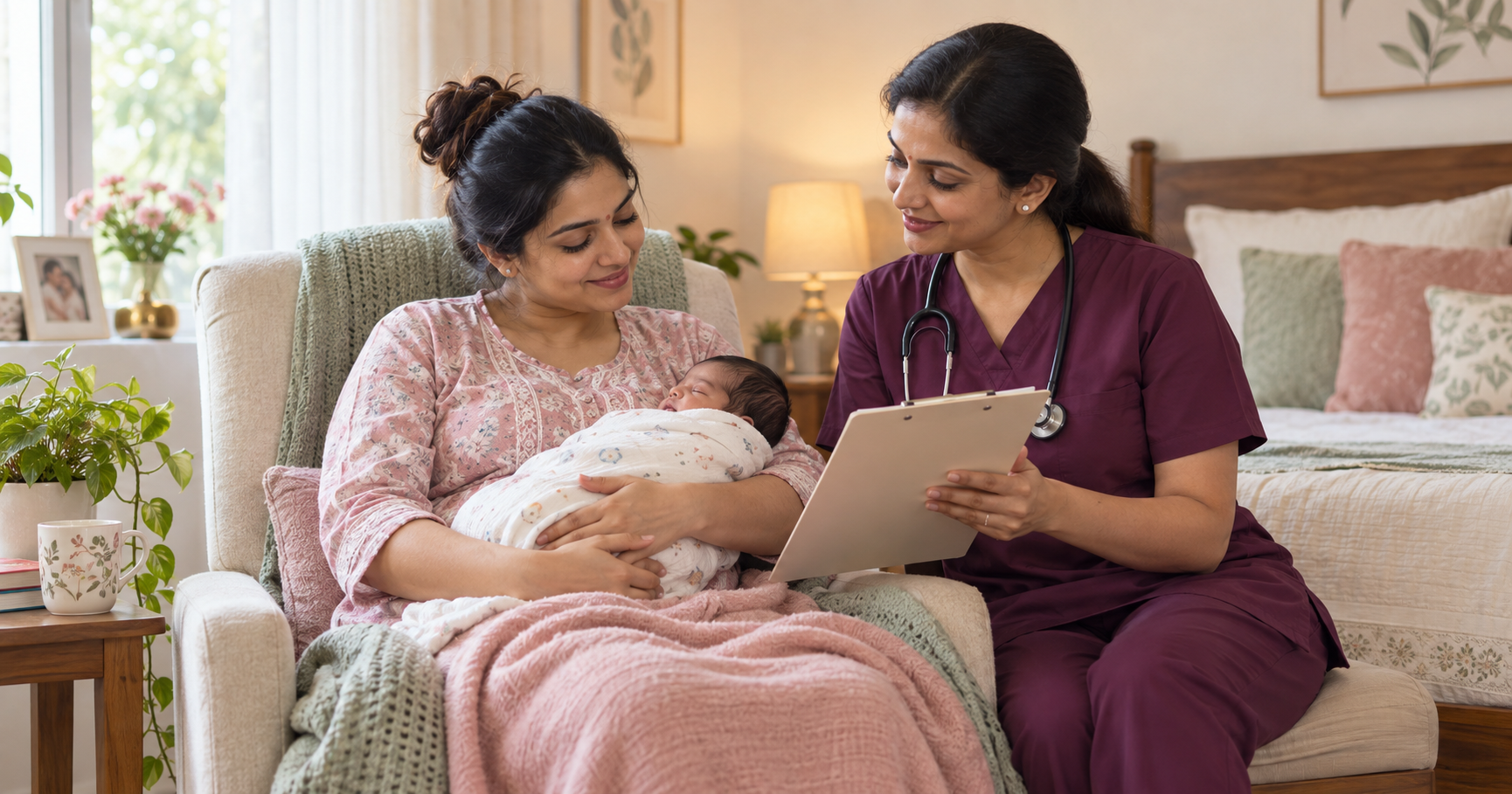
C-section recovery is a marathon your body runs while you're also learning to keep a tiny human alive — and nobody hands you the route map. A caesarean is major abdominal surgery, so healing takes time: about 6 weeks for the basics, and a few months for full internal healing. The good news? Recovery follows a fairly predictable weekly rhythm, and once you know what's normal for each week, half the 1 a.m. worries disappear.
First, reset one expectation
Whether your caesarean was planned or a change of plan mid-labour, the recovery is the same — and so is this truth: mothers who accept help, rest deliberately, and follow the weekly pace below usually recover faster than those who push through pain to "prove" they're fine. Your only jobs for six weeks: heal, feed, bond. Everything else can be delegated.
C-section recovery week by week: the timeline
| Week | What to expect |
|---|---|
| Week 1 | Hospital 3–4 days; first walk in 24 hrs; maximum soreness; heavy bleeding |
| Week 2 | Wound check; pain easing; short home walks; bleeding lightens |
| Weeks 3–4 | Energy returns; light chores OK; scar may itch (healing sign) |
| Weeks 5–6 | Near-normal movement; 6-week check-up clears exercise & more |
Now the details, week by week.
Week 1: the hospital week (days 1–7)
- First 24 hours: you'll be helped to stand and take a few steps — it feels impossible and it's the single best thing for preventing blood clots and gas pain. The urine catheter usually comes out within a day.
- Pain: this is the sorest week; take the prescribed painkillers on schedule — they're safe with breastfeeding, and staying ahead of pain helps you move and feed better.
- Feeding without hurting the incision: use the side-lying or football hold so the baby's weight never rests on your stitches. Ask the nursing staff to set you up — that's what they're there for.
- The wound: kept covered initially, then open and dry. Most hospitals now use dissolvable stitches — nothing to remove.
- Bleeding: lochia is heaviest now — like a heavy period. Pads only, no tampons or cups.
- Going home (day 3–4): arrange the bed so you don't need stairs repeatedly, and keep water, snacks, and baby supplies within arm's reach.
Week 2: turning the corner
- Pain drops noticeably; many mothers switch to occasional painkillers.
- Wound check visit: your doctor confirms healing. Watch daily for redness spreading, discharge, or opening — see the red flags below.
- Walk a little more each day — 5–10 minute gentle walks inside the house. Movement heals; workouts don't (yet).
- Constipation is the villain of week 2: fibre (fruits, vegetables, dalia, soaked raisins), lots of water, and a stool softener if prescribed. Never strain — support the incision with a pillow when coughing, sneezing, or laughing.
Weeks 3–4: energy returns (don't spend it all)
- Bleeding lightens to spotting; energy improves week on week.
- Light activity is fine — folding clothes, short kitchen tasks, longer walks. Still no lifting anything heavier than your baby, no mopping/sweeping-style bending, no intense stairs routines.
- Scar itching is a healing sign, not a problem. Numbness around the scar is also normal and can last months.
- Mood check: baby blues should have settled by week 2. If sadness, hopelessness, or detachment persist, that's worth a conversation — our guide on postpartum depression vs baby blues explains the difference. Recovery is physical and emotional.
Weeks 5–6: the finish line (of phase one)
- Most mothers feel close to normal in daily movement by now.
- The 6-week postnatal check-up is non-negotiable. Your doctor examines the scar and uterus, and clears you for exercise, intimacy, and driving if not already resumed. This is also when to discuss contraception and any pending vaccinations.
- After clearance: begin gentle core and pelvic floor work — walking, breathing exercises, pelvic tilts. The "C-section pooch" responds to months of gentle consistency, not crash workouts.
- Scar care: once fully healed and dry, gentle massage with a plain moisturiser or coconut oil can soften the scar line.
Indian home care: what helps, what to skip
- The 40-day jaapa works — rest, warm home-cooked food, and family support are exactly what surgical recovery needs. Accept the pampering.
- Healing foods: protein at every meal (dal, paneer, eggs, chicken), iron-rich foods to rebuild blood, and plenty of fluids for breastfeeding. Traditional panjiri or gond laddoo in moderation is fine — pair with fibre so constipation doesn't strike. Our diet guide has the food foundations.
- Belly binding: a soft postpartum support band is fine if it comforts you; tight traditional binding directly over a fresh incision is not — wait for your doctor's go-ahead.
- The "ghee heals stitches faster" theory: ghee is fine as food; no food melts or heals stitches. Protein and rest do the healing.
- Stairs in Indian homes: allowed, but minimise trips in weeks 1–2 — plan your day in "trips saved."
🚨 Red flags: call your doctor the same day
- Fever above 100.4°F (38°C)
- Incision becoming more red, swollen, oozing, or opening at any point
- Bleeding that suddenly increases, or soaking a pad within an hour
- Foul-smelling discharge
- Pain, swelling, or warmth in one calf; chest pain or breathlessness (emergency — go now)
- Severe headache with vision changes
- Feeling hopeless, detached, or having scary thoughts — this is medical, common, and treatable
When in doubt, call. No question is "too small" after surgery.
Don't measure your recovery against Instagram — measure it with your doctor.
Frequently asked questions
About 6 weeks for daily-life recovery, and up to 6 months for complete internal healing. Energy, scar comfort, and core strength keep improving well beyond the 6-week check-up.
The skin layer heals in about 1–2 weeks (most hospitals use dissolvable stitches), but the deeper layers take 6 weeks or more — which is why lifting restrictions continue even when the scar "looks fine."
Yes, carefully and slowly, from the time you go home — but minimise trips in the first two weeks. Plan your day to reduce up-and-down rounds.
Light tasks from weeks 3–4; avoid lifting anything heavier than your baby, mopping-style bending, and heavy chores until your 6-week clearance.
Protein at every meal (dal, paneer, eggs, chicken), iron-rich foods, fruits and fibre for constipation, and plenty of water — especially if breastfeeding. No single "special food" heals stitches; overall nutrition does.
Most doctors advise waiting at least 12–18 months before conceiving again, so the uterine scar heals fully — especially important if you're hoping for a VBAC (normal delivery after caesarean) next time.
Key takeaways
- C-section recovery runs on a 6-week clock — hospital week, turning the corner, energy returning, then clearance at the 6-week check-up.
- Walk early, rest deliberately, lift nothing heavier than your baby — these three rules cover 90% of recovery.
- Dissolvable stitches heal outside in 1–2 weeks; the inside needs the full 6+.
- The 40-day jaapa and modern medicine agree: rest, warm food, and family support are the treatment.
- Know the red flags — fever, worsening incision, sudden bleeding, calf pain, or persistent low mood mean call the doctor today.
Recovering from a C-section right now?
At Femme Nest Hospital, East Delhi, our postnatal team follows you beyond the delivery room: wound checks, feeding support, recovery-diet guidance, and the all-important 6-week check-up — all with the doctors who know your delivery history.
Book your postnatal check-up Call or WhatsApp 092180 72466Crossed week 5? Your 6-week check-up window is open — book it today.
This article is for educational purposes only and is not a substitute for medical advice. Every surgery and every recovery is individual — always follow your treating doctor's guidance.